Meet the Black Dog - A View on Depression

Updated: May 20
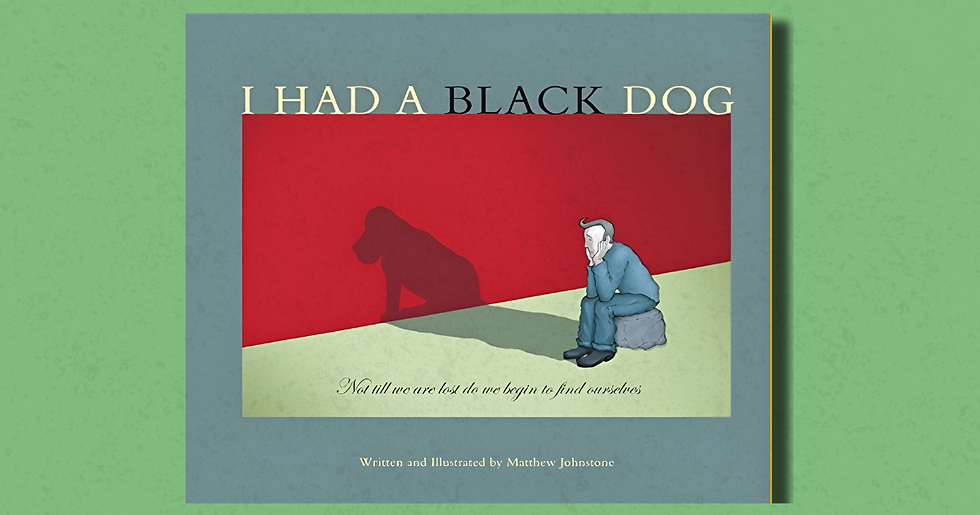
If you've never heard of the Black Dog, let me introduce you. Not the Led Zeppelin track. Not an actual dog. The Black Dog is one of the most powerful metaphors ever used to describe depression - and if you've never encountered it, the videos by Matthew Johnstone (produced in partnership with the World Health Organisation) are well worth your time. The metaphor itself is old. Winston Churchill used it to describe his own depression and Johnstone brought it back to life in his book I Had a Black Dog, which became the basis for two short animated films. The first follows someone living with depression. The second is aimed at people who love someone with depression. Both are beautifully simple and both are on YouTube. Watch them. The links for them are below.
What is the Black Dog?
So what is the Black Dog?
In the films, the Black Dog turns up uninvited and just... stays. It follows you everywhere. It sits on the bed. It takes up space at the dinner table. It makes everything heavier - getting up, going out, being around other people, feeling anything at all.
What makes this metaphor so effective isn't just that it's visual. It's that it captures something that statistics and clinical language often miss: the weight of depression. The way it doesn't leave you alone. The way it affects not just how you feel, but how you function, how you relate to others, what you're capable of on any given day.
Meet the Black Dog: Depression Isn't Just Sadness
Depression isn't just sadness. It isn't a bad week or feeling a bit flat. The Black Dog is relentless. And unlike an actual dog, it doesn't respond to treats or a stern voice.
Why Metaphor Matters
Here's the thing about mental health: it's notoriously hard to talk about, partly because we've spent decades using language that doesn't quite fit. "Suffering from depression" sounds clinical. "A bit low" sounds like an understatement. "Struggling" covers everything from a bad commute to a full crisis. None of it quite lands.
The Black Dog does. It's concrete enough to picture, vague enough not to prescribe an exact experience and honest enough to hold the reality that depression isn't just a feeling - it's a presence. It moves in with you. And it can make you feel profoundly alone, even when you're surrounded by people who care about you.
That's important, because one of the cruellest tricks depression plays is convincing you that nobody would understand or that you're a burden, or that you've somehow brought this on yourself. You haven't. The Black Dog doesn't discriminate. It turns up for people who seem to have everything, for people who are naturally cheerful, for people who are brilliant at their jobs and good at hiding it. Which brings me to the other video.
The Second Dog - For Loved Ones
The second dog - the one people forget about
The follow-up film is called Living with a Black Dog, and it's aimed at partners, family and friends. It's just as important as the first - maybe more so, because the people around someone with depression are often quietly struggling too. They don't know what to say. They're afraid of doing the wrong thing. They try to fix it, which doesn't work and then feel helpless.
The film gently explains what helps and what doesn't. Spoiler: trying to argue someone out of depression doesn't help. Pretending it isn't there doesn't help. Patience, presence and not making it about yourself? That helps. It's a short watch that could genuinely change how someone supports a person they love when they meet the black dog.
Why This Matters
So why does any of this matter?
Because we're still not great at talking about depression. We're better than we were - there's less shame, more awareness, more willingness to say "I'm not okay" - but the stigma hasn't gone entirely. People still worry about being seen as weak or dramatic, or a problem. They still wait too long before asking for help.
If you think you might have a Black Dog of your own, please talk to your GP or reach out to any of the support service below. You don't have to minimise it or dress it up or prove it's bad enough. It is bad enough. You're allowed to ask for help.
And if someone in your life has a Black Dog - and statistically, someone does - watch the second video. Then just show up. You don't have to have the right words. You just have to not disappear.
The black dog & Living with the black dog watch them here.
Links For support:
Campaign Against Living Miserably (CALM) - live chat, Whatsapp and phone support 5pm to Midnight
Mind - resources, advice and support
NHS - advice and support
The Samaritans - a confidential, 24/7 emotional support to anyone in distress, struggling to cope, or at risk of suicide
Shout - a free, confidential, 24/7 crisis text support service for anyone in the UK.

I am a D&I consultant, keynote speaker, Mental Health First Aider, writer and transgender woman with 20+ years of senior corporate leadership experience. I work with businesses across all sectors to build genuinely inclusive cultures whilst also supporting transgender individuals and their families through every stage of the journey. If this piece resonated, you can find more articles on andreaking.net or book a free discovery call if you'd like to talk.
The views expressed in this article are my own and are based on personal experience and perspective. They are not intended as medical, legal or professional advice.
Frequently Asked Questions
What makes the Black Dog such an effective depression metaphor?
It captures depression's constant presence and functional weight (making everything harder) better than clinical terms, showing it's not just sadness but a pervasive companion affecting relationships and daily life.
Is depression just feeling sad for a long time?
No. The Black Dog shows depression as relentless exhaustion that impacts functioning, social connection and basic tasks - far beyond temporary low mood.
What should family/friends of someone with depression do?
Watch "Living with a Black Dog" - be patient and present rather than trying to argue them out of it or fix it. Just not disappearing matters most.
Why do people with depression hide it well?
Like Churchill, many become expert at performance while internally exhausted. The Black Dog follows everywhere but learns to sit quietly in public.
When should someone seek help for depression?
Anytime it feels heavier than you can carry alone. You don't need to prove it's "bad enough" - GPs and services like Samaritans exist for exactly this reason.


Comments